Articles and reports

PCSS Provides AI Technology: Large Language Models within Your Reach

Access to artificial intelligence models through API is one of the flagship services offered by PCSS. Previously available mainly to researchers, it can now be used not only by the scientific community but also by commercial customers. Originally designed to support research, academic projects, and educational activities, the service is now open to businesses as well. Advanced tools built on PCSS’s state-of-the-art and – very importantly – secure HPC infrastructure are now literally within reach for companies, including small and medium-sized enterprises.

Read more

About us: Practical implementation of domestic language models

As part of the “Start z polskim AI” series, organized by Polski Fundusz Rozwoju (PFR), a conversation has been released focusing on the implementation of local artificial intelligence solutions in organizations. The guest was Tomasz Parkoła, Head of the Network Services Division at PCSS, who shared insights into working with the Bielik.AI model. The material serves as a comprehensive knowledge base for entities planning strategic AI deployments based on Polish resources.

Read more

PCSS expert co‑author of a scientific publication in a prestigious journal on the modular reference architecture of SHOP4CF

The article “The SHOP4CF modular reference architecture for flexible process-oriented, data-driven smart manufacturing” by Paul Grefen, Michał Zimniewicz (PCSS, Large-Scale Applications and Services Department), Irene Vanderfeesten, Kostas Tragonas, Pieter Becue, Anders Pedersen, and Genessis Perez Rivera has been published in issue 85 of the Journal of Manufacturing Systems, available on ScienceDirect.

Read more

PCSS’ Aleksandra Nowak Is One of LUMEN’s Voices

An interview with Aleksandra Nowak – the Head of Digital Libraries and Knowledge Platforms Department of PCSS, has just appeared on the lumenproject.eu website as a part of the LUMEN Voices series. Aleksandra gave an insight on her team’s role in the LUMEN project, which combines mathematical sciences, humanities, social sciences, earth systems, molecular dynamics, and more.

Read more

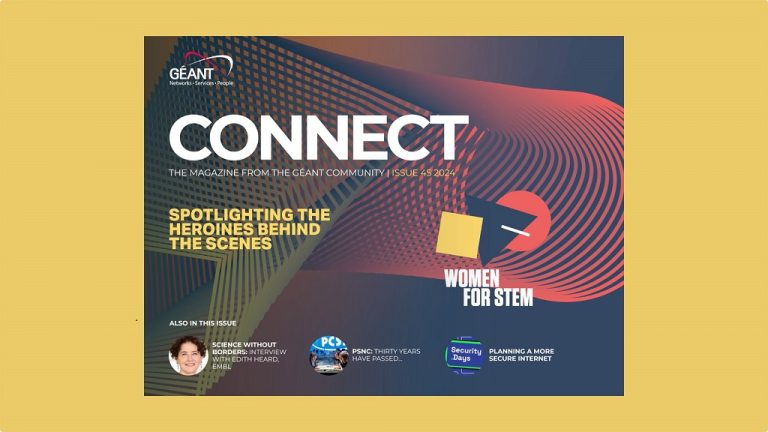
About PSNC in GÉANT CONNECT

The latest, June issue of the magazine “CONNECT”, focused on the GÉANT network and community, features an article on next-generation research infrastructures. These projects are being implemented within four leading projects run by PCSS and based on the PIONIER Network.

Read more

GÉANT’s “Foresight 2030: Navigating Change” Report

At the end of 2024, GÉANT released a report identifying the key opportunities and challenges facing the NREN community (National Research and Education Network) in the coming decade. One of the authors of this document is Raimundas Tuminauskas – Head of the Network Infrastructure and Services Department at PSNC.

Read more

Nobel Prizes 2024: AI in Physics and Chemistry

This year’s Nobel Prizes in Physics and Chemistry highlight the groundbreaking role of artificial intelligence in those fields. To get insights into this significant development, we reached out to Dr Mikołaj Buchwald – an expert from the PSNC Internet Services Department, whose research interests include cognitive neuroscience, machine learning methodology, as well as using AI plus advanced data analysis to explain human physiology and psychology.

Read more

PSNC Leaps into the future of computing

Thanks to the Dariah.lab infrastructure, the first pilot projects for the preservation and dissemination of cultural heritage resources have been implemented in 2023. Dariah.lab is a research infrastructure for the humanities and arts, built as part of the DARIAH-PL project. It serves to acquire, store and integrate cultural data from the humanities and social sciences, and to process, visualise and share digital resources.

Read more
Dariah.lab: cultural heritage documentation

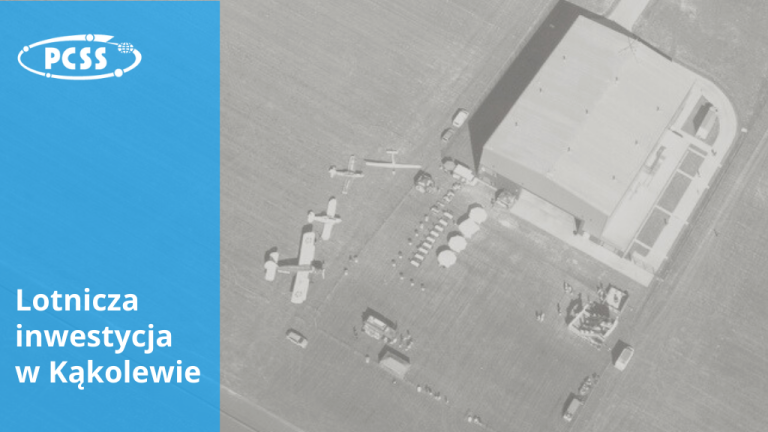
Thanks to the Dariah.lab infrastructure, the first pilot projects for the preservation and dissemination of cultural heritage resources have been implemented in 2023. Dariah.lab is a research infrastructure for the humanities and arts, built as part of the DARIAH-PL project. It serves to acquire, store and integrate cultural data from the humanities and social sciences, and to process, visualise and share digital resources.

Read more